


Designing an Event Journey Worth Remembering

She was greeted by name at the door, a detail that took 30 seconds of preparation per guest but immediately changed the tone of the arrival. Her table card was set at a precise angle. The menu was printed on paper with enough weight to hold flat without a stand. The first course arrived four minutes after she sat down—the window commonly identified as the point at which a seated guest begins to feel either attended to or forgotten. By the time the centrepiece moment of the evening arrived, two hours of considered pacing had brought her to it. The response it produced was not manufactured in that instant. It was built across the full duration of the evening, one calibrated decision at a time.
“Events are remembered in motion, not in moments.”
A guest’s memory of an evening is not a photograph of its peak moment. It is closer to a film, shaped by the sequence of everything that preceded and followed that moment. The reveal that stopped the room lands differently when the two hours before it were paced to build towards it than when they were not. The award that drew a standing ovation carries more weight when the programme gave the audience time to understand what they were about to witness. Designing the journey means treating every transition, from drinks to dinner, from dinner to programme, from programme to close, as a creative decision with consequences for what comes next.
“Anticipation is part of the experience.”
Most productions treat the hour before the main event as preamble. The guests who arrive early are managed when they should be engaged, the room is not yet ready to be seen, and the programme has not started. This is a significant waste of time, because anticipation is not the gap before the experience begins. It is the first hour of it. A programme card that sequences the evening without revealing its details, an arrival drink served in a space adjacent to but not yet inside the main room, a stage that is visible but not yet lit when guests are seated: each of these extends the experience backwards in time, so that the moment of revelation, when it arrives, has been earned.
“Restraint creates impact.”
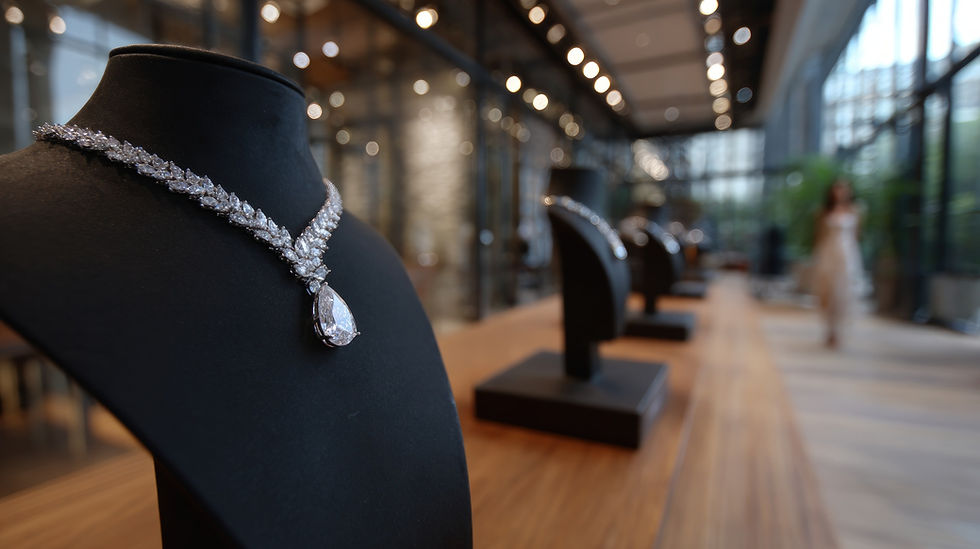
Filling a room with branded touchpoints on every surface is a decision that tends to reflect the brand team’s anxiety instead of the guest’s needs. The brief for most high-calibre events includes a hero object, like a vehicle, a jewel, or a collection, something that warrants the occasion. That object performs best when the environment around it has been edited to remove competition for the guest’s attention. In practical terms, this means one hero installation, seating arranged so that sightlines converge on a single point, and a colour palette that does not introduce visual noise. The guest should be able to identify, within 30 seconds of entering the room, what the evening is about.
“Emotion is the only souvenir that matters.”
Six months after the event, the guest will not remember the specific dishes or the exact configuration of the floral arrangement. But what persists is the feeling the evening produced. Perhaps it is the specific quality of being in a room where the brand revealed itself as more considered than expected, or where a product earned genuine admiration rather than polite interest. That feeling is produced by sensory decisions that could range from the colour temperature of the lighting at the moment of reveal to the silence before the doors to the main room open. None of these are decorative or theatrical choices, because each one produces a measurable effect on how a guest receives what follows.
“Every detail makes a promise.”
If a guest can feel how hard the evening worked to impress them, it did not work hard enough. Rehearsing the run sheet twice a day is time well spent if it makes the programme run to time without anyone in the room sensing that it is being actively managed. Briefing the service team on the exact moment each course will be cleared and each speaker will take the stage is what produces the impression of an unhurried evening. Likewise, running the lighting sequence four times before the first guest arrives is what allows it to shift without anyone noticing. When a guest senses the effort behind an event, it is because some part of the preparation was still rough around the edges, and the gap between what was planned and what was ready became visible on the night.
“Memories need designing too.”
Of all the things a production team controls, the most quietly extraordinary is this: they decide what a group of people will remember for years. The final 20 minutes of an event shape its memory as much as its peak. A programme that ends abruptly, or runs past the point at which the room’s energy has naturally peaked, undoes work that took hours to build. The close should be as considered as the opening, serving as a final moment that gives the guest something to leave with, whether a physical object, a piece of information, or a clear and satisfying sense that the evening reached its intended conclusion. Guests who leave on that note carry the full arc of the evening with them. By contrast, guests who leave with no clear sense of where the evening ended are left grappling with loose ends they cannot quite put their finger on.
Let Us Show You — The Greatest Journeys Aren’t Accidental
Visionnaire creates high-calibre event experiences for brands that understand that luxury is felt in the details. Every production is approached as a complete guest journey, where anticipation, pacing, atmosphere, precision, and restraint work together to shape what the guest ultimately remembers. ISO 20121 certified and EcoVadis Platinum-rated, the agency brings rigorous production discipline to the invisible decisions that make an experience feel effortless.
Make the moments between the moments matter with Visionnaire. Get in touch.


Comments